The Importance of CWBT (Chilled Water Buffer Tanks) in Data Centre
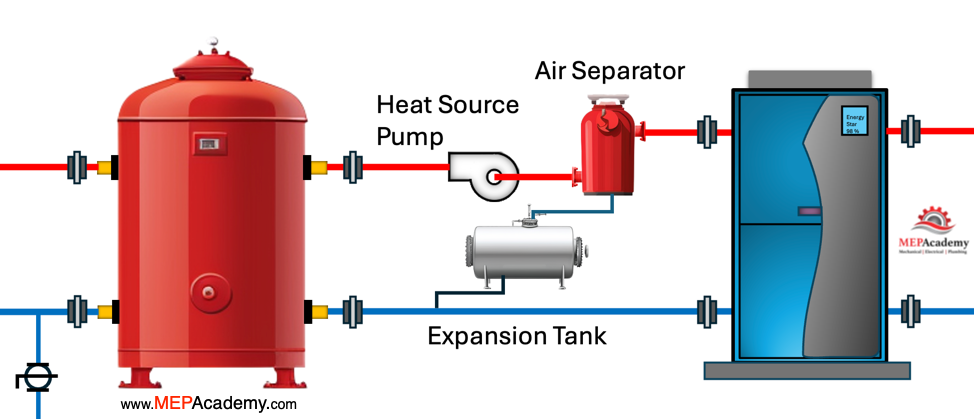
Chilled Water Buffer Tanks (CWBT) play a critical role in ensuring reliable and efficient cooling systems within data centers. As these centers continue to evolve and expand, implementing buffer tanks becomes essential for maintaining optimal operating conditions.
Key Benefits of CWBT:
Redundancy and Resilience:
- Buffer tanks act as an additional layer of redundancy in the cooling infrastructure.
- During power outages or unexpected system failures, CWBTs provide a cushion by allowing continuous cooling operations.
- Motorized valves within the buffer tanks help maintain stability, minimizing disruptions to critical IT equipment
Scalability:
- CWBTs offer flexibility in managing cooling capacity and infrastructure.
- As data center needs change, buffer tanks allow seamless adjustments without compromising system performanc
In summary, CWBTs enhance data center reliability, resilience, and adaptability. They ensure uninterrupted cooling, safeguarding critical IT equipment even during challenging scenarios.
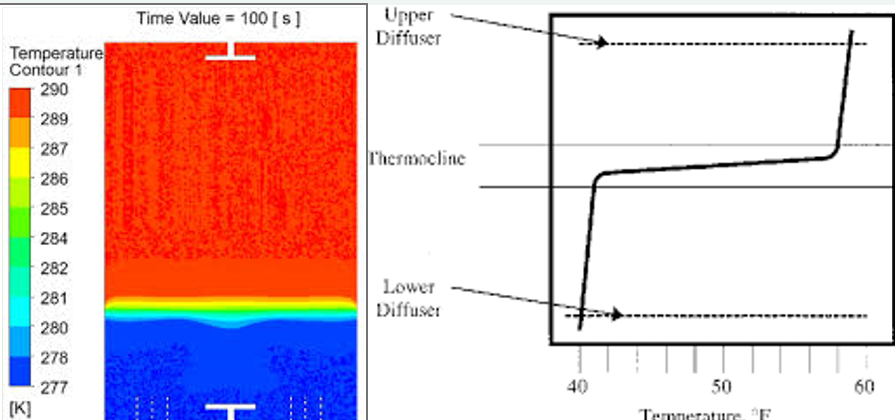
In thermal stratified chilled water buffer tank, the warmer the water, having lesser density is floating on top of tank. The colder water remains at below. The chilled water is then discharged at low velocity via piping diffusers, in a horizontal flow of vertical tank, so that buoyancy forces dominate the inertia effects to avoid mixing.
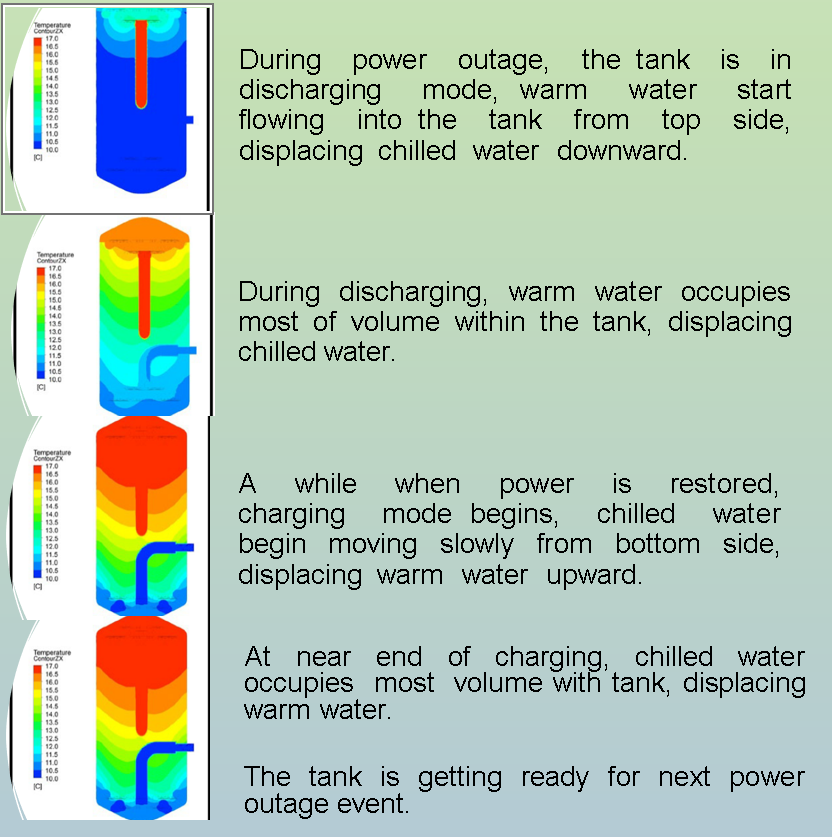
Thermocline shown in Fig. 1 is a transition or separation layer between the hot and cold segment of the buffer tanks. Well-designed stratified buffer tank, supported by Computational Fluid Dynamics (CFD) is having FOMs of about 85 to 95 percent. The operation of vertical buffer tank could be simplified as shown in Fig. 2.
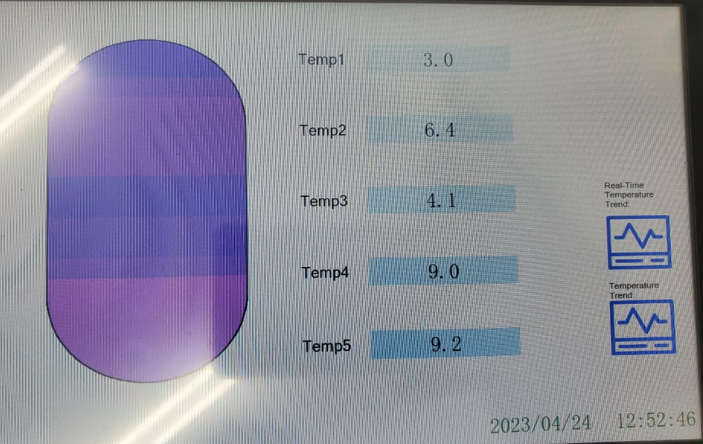
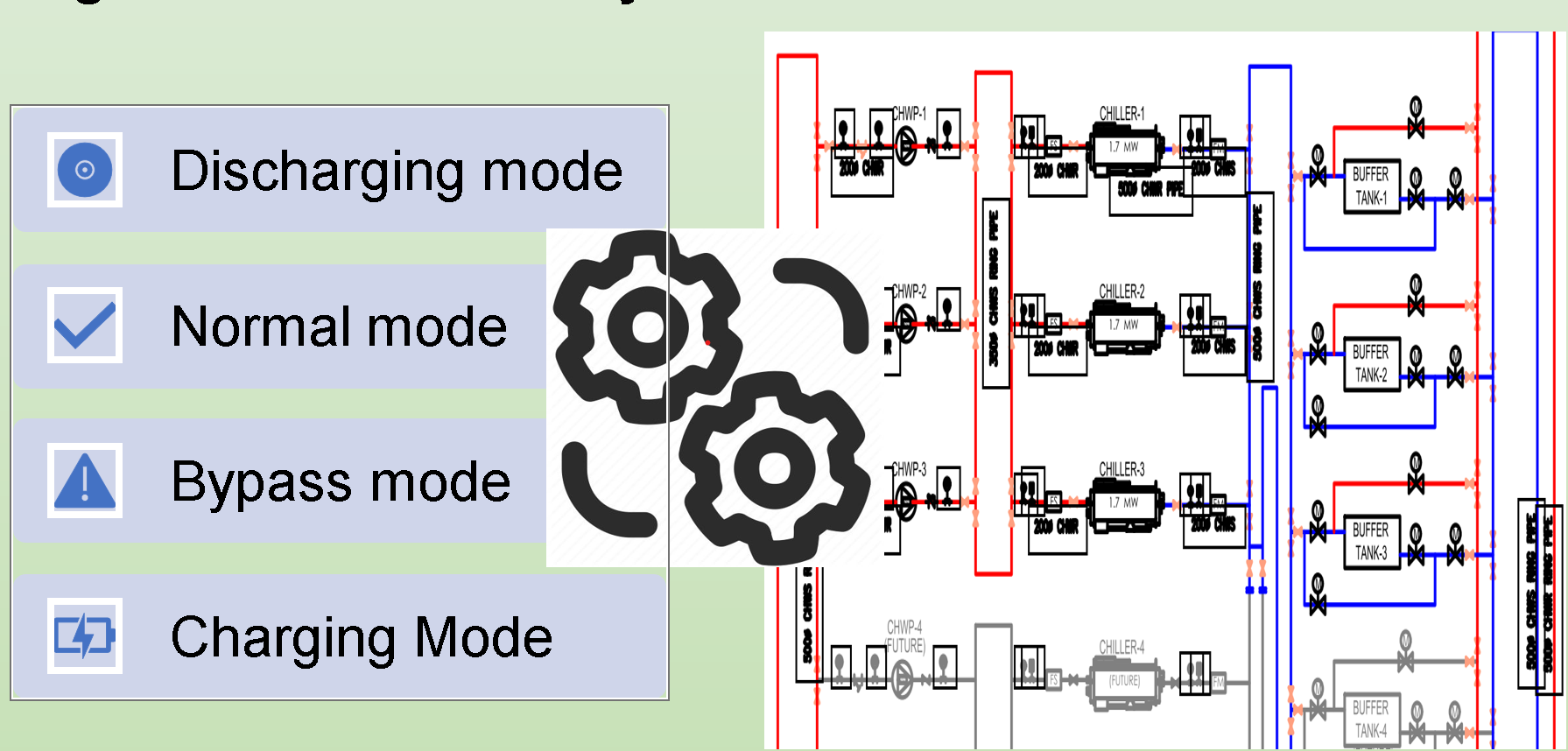
Here, Chokma Solutions has the know how, playing a crucial role as a system integrator, incorporating these storage solutions, to achieve better thermal management, maintain operational stability, and future-proof cooling infrastructure for data center. A smart monitoring display with simple control capability is introduced to enable facilitate personnel to easily track the performance closely to enable timely diagnosis and troubleshooting as shown in Fig 3.